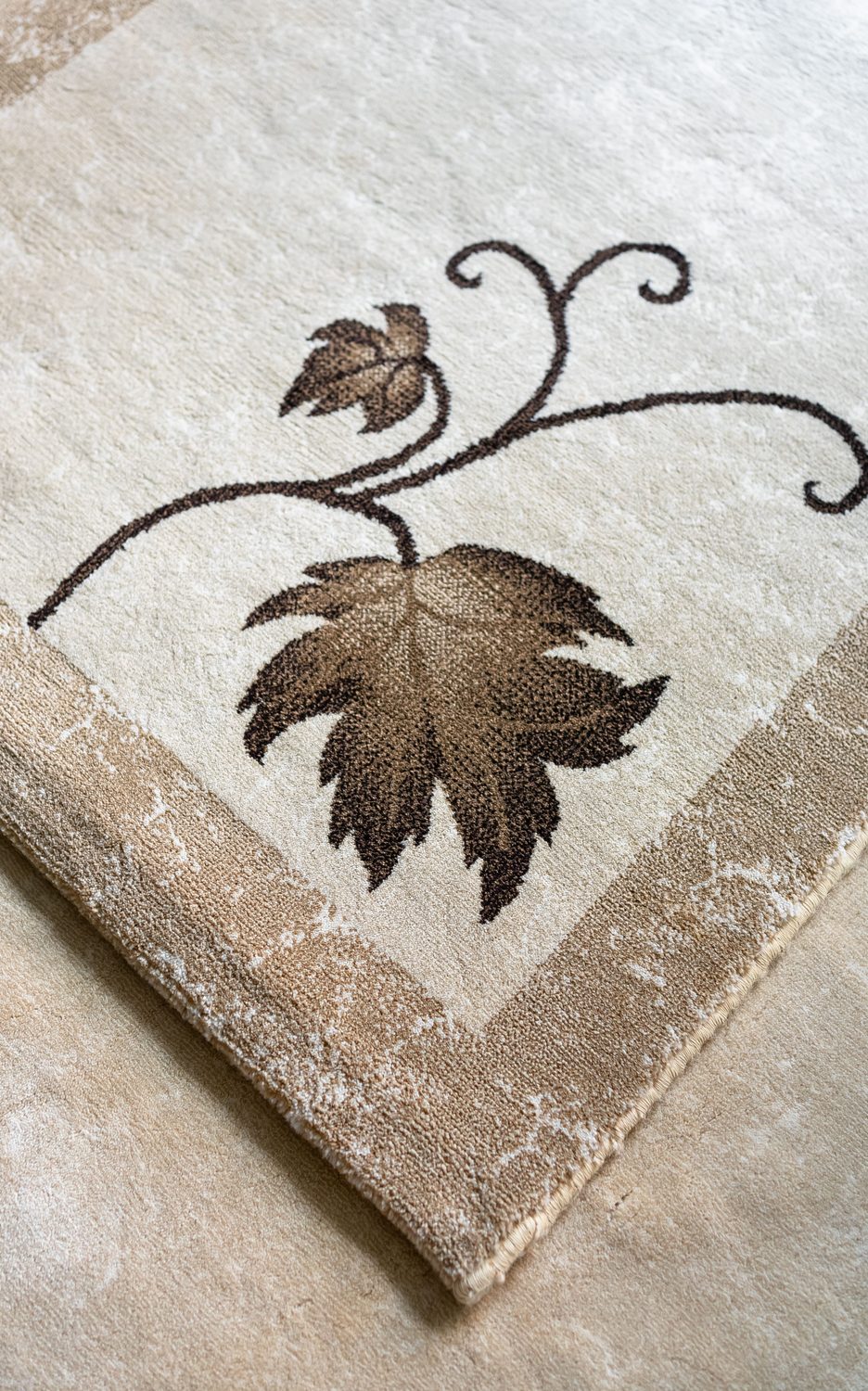
Rug Care
What the Underside of an Area Rug Tells You
September 12, 2024·8 min read
Most people only ever look at the top of a rug. Turn a corner over and you can see how it was made, whether moisture is collecting, and whether insects have started working.
Most people only ever look at the top of an area rug. The underside is where the useful information is.
Turn a corner over and you can tell how the rug was made, whether moisture is collecting, whether insects have started working, and whether the foundation is still sound. Two minutes there, twice a year, prevents most of the problems in this article.
Start by learning what you own
Hand-knotted rugs are built one knot at a time around warp threads. Flip one over and the pattern on the back is as crisp as the pattern on the front, because the pattern is the structure. These are the rugs that last generations, and they want the gentlest handling.
Hand-tufted rugs look similar from above and behave completely differently. The pile is punched through a backing cloth, held with latex adhesive, and covered with a second backing glued over the top. Flip one over and you see fabric, not pattern. The adhesive is the weak point. It breaks down with age and with over-wetting, which is when a tufted rug starts shedding and giving off a faint glue smell.
Machine-made rugs are woven on a loom, and the back shows a machine-regular grid. They tolerate a wider range of cleaning than the two above, though the fibre still decides the chemistry.
Flatweaves and kilims have no pile at all. Light, reversible, and prone to shrinking unevenly if they are dried without tension.
Which of these you own decides everything that follows.
On site or at a facility
For a synthetic rug that just needs freshening, cleaning it where it lies is fine.
For anything wool, silk, hand-knotted, or badly soiled, a facility is the better call, and the reason is water. A rug on your floor can only be cleaned from the top with limited water, because everything that goes in has to come back out before it reaches the floor. At a facility the rug can be dusted first, immersed, rinsed from both sides, and dried flat under moving air.
Dusting is the step most people have never heard of, and it matters more than the wash. Dry soil settles down through the pile and sits on the foundation, below where any vacuum reaches. Facilities shake it out mechanically before any water is introduced. A rug that has never been dusted can give up pounds of dry soil, all of which has been grinding at the base of the pile for years.
Turnaround is usually one to two weeks. Most cleaners collect and return.
Rug pads on hard floors
A pad does four things at once, and only one of them is stopping slips.
It holds the rug still, which spares the foundation constant small stresses. It leaves an air gap so moisture is not trapped against hardwood or tile. It cushions each footstep so the knots are not crushed against a hard surface. It keeps the backing from abrading on stone and grout.
Choose a firm felt or felt and rubber pad. Avoid soft foam, which compresses flat and stops doing anything. Avoid cheap solid rubber sheeting on finished wood, since some of it reacts with the finish and leaves a mark that outlasts the rug.
Rotation, twice a year
Turn the rug 180 degrees every six months. It is the least demanding thing on this list and the one most often skipped.
Traffic wears one end faster than the other. Light fades one side faster than the other. Rotating spreads both, so the rug ages evenly instead of developing a visible good half and bad half.
Light fades rugs quietly
Ultraviolet light breaks dye down and makes wool and cotton fibres brittle over time. The change is slow enough that you never notice it, until you move the rug and find the original colour sitting under the sofa.
Rugs near south or west facing windows take the most of it. UV filtering film on the glass, sheers during the brightest hours, or simply moving the rug will all help. Rotation is the fallback that costs nothing.
Moths work in the dark
Wool is food. Clothes moth larvae and carpet beetles both feed on it, and both prefer places that are dark and undisturbed. That means under the sofa, along the wall edge, under the bed, and on the back of the rug.
What to look for: thin bare patches where the pile has been eaten down to the foundation, small silky tubes or cases, and a scatter of sandy debris on the floor when you lift the rug.
Damage is permanent once the pile is gone, so early detection is the whole strategy. Lift and look twice a year. A proper wash kills eggs and larvae, which is why cleaning a rug before it goes into storage matters so much.
Drying is where rugs are ruined
More rugs are damaged in the drying than in the washing.
Wool holds water deep in the pile. A thick rug that feels dry on top can still be wet at the foundation for days. Left that way it grows mildew, and any unstable dye has time to migrate into the fibre next to it.
Dried flat with air moving over both faces, none of that happens. Dried draped over a rail, a rug can distort and crease along the fold. Dried on a floor with no airflow underneath, the bottom simply stays wet. If a rug is ever cleaned in your home, keep furniture off it until it is dry all the way through rather than dry to the hand.
Storage
Clean it first. Storing a soiled rug is the most common way an infestation starts, because the soil is the food source.
Roll it, do not fold it, with the pile facing inward. Wrap it in something breathable such as cotton sheeting. Plastic traps moisture against the fibre and causes the exact problem you were trying to avoid. Keep it off the floor, and unroll it once a year to look at it.
When to ask for help
Ask before you experiment if the rug is hand-knotted, if it is silk, if the dyes look uneven or have run before, if pet urine has gone through it, if it has been wet for more than a day, or if you can see foundation threads through the pile.
A good assessment covers fibre content, construction, dye stability, any existing damage to fringe and foundation, and what the rug needs. It takes a few minutes, and it happens before anything wet touches the rug.
The rest is simple. Vacuum weekly with a suction only head. Rotate twice a year. Use a proper pad. Look underneath. Rugs treated that way tend to outlive the rooms they were bought for.
Common Questions
How can I tell if my rug is hand-knotted or hand-tufted?
Turn it over. A hand-knotted rug shows the pattern on the back as crisply as on the front, because the pattern is the structure. A hand-tufted rug shows plain fabric, because the pile is punched through a backing cloth and held with latex adhesive. That adhesive is the weak point, and it breaks down with age and over-wetting.
What is rug dusting and why does it matter?
Dusting removes dry soil mechanically before any water is used. Soil settles down through the pile and sits on the foundation, below where a vacuum can reach, and grinds at the base of the fibre with every step. A rug that has never been dusted can give up pounds of it. This is the main advantage of cleaning at a facility rather than on your floor.
Should a rug be cleaned in the home or taken away?
Synthetic rugs that just need freshening are fine at home. Anything wool, silk, hand-knotted, or badly soiled does better at a facility, because a rug on your floor can only be cleaned from the top with limited water. At a facility it can be dusted, immersed, rinsed from both sides, and dried flat. Turnaround is usually one to two weeks.
Do I need a rug pad on a hardwood floor?
Yes. A pad holds the rug still so the foundation is not stressed, leaves an air gap so moisture is not trapped against the floor, cushions each footstep so the knots are not crushed, and keeps the backing from abrading. Choose firm felt or felt and rubber. Avoid soft foam, and avoid cheap solid rubber on finished wood.
How do I know if my rug has moth damage?
Look at the underside and the edges under furniture, since larvae feed where it is dark and undisturbed. Signs are thin bare patches where the pile has been eaten to the foundation, small silky tubes or cases, and sandy debris on the floor when you lift the rug. Damage is permanent once the pile is gone, so check twice a year.
What is the right way to store a rug?
Clean it first, since soil is what feeds an infestation. Roll it rather than folding it, with the pile facing inward, and wrap it in something breathable such as cotton sheeting. Plastic traps moisture against the fibre. Keep it off the floor and unroll it once a year to check on it.
Why does drying matter so much?
More rugs are damaged in drying than in washing. Wool holds water deep in the pile, so a rug that feels dry on top can be wet at the foundation for days, which grows mildew and gives unstable dye time to migrate. Rugs should dry flat with air moving over both faces, and furniture stays off until it is dry all the way through.
Ready When You Are
Price the whole room in under a minute. We confirm the details before the visit.
Get an instant quote